Dear Every Cure community,

Last month marked four years since we started Every Cure in August 2022, and we are so thankful for all of the impact that we’ve been able to make together.

When we started Every Cure, we had an ambitious idea: build a nonprofit that could systematically identify new uses for existing medicines and help advance the most promising ones toward patients. I knew the potential of drug repurposing from my own experience and was heartbroken by the millions of patients who suffer while a life-saving treatment exists for another disease, but I couldn’t have predicted the team we would build, the partners who would join us, or how quickly this work would grow.

Four years later, we now have 15 active drug repurposing programs at different stages of research and development. And we’re continuing to expand not just what we’re working on, but how we find and advance these opportunities.

This month’s newsletter is a great snapshot of that progress. We’re sharing three new additions to our portfolio, new research with physicians to better understand awareness of a promising repurposing opportunity, and a behind-the-scenes look at how our technology team is building AI agents to help us identify promising drug-disease matches.

We’ve come a long way in four years, but there are still far too many patients waiting for answers while their treatment hides in plain sight. That’s what keeps us focused on what comes next, and why I’m so grateful to the researchers, clinicians, patients, partners, supporters, and everyone else who has helped us get here.

Thank you for being part of our mission. 

David Fajgenbaum, MD, MBA, MSc 

Co-Founder & CEO, Every Cure


Three new programs added to Every Cure’s portfolio

We’re excited to share that Every Cure has added three new active drug repurposing programs to our portfolio.

Two of these programs are among the earliest and most exploratory efforts in our pipeline. Both focus on rare pediatric diseases (an antifibrotic therapy for a rare pediatric multisystem disorder and an approved oral therapy for a rare pediatric neurological condition) and are evaluating promising drug repurposing hypotheses through initial preclinical studies. These experiments are designed to establish early evidence of biological activity and determine which opportunities have the strongest potential to advance toward further validations and, ultimately, patients.

Our third new program, sirolimus for Sturge-Weber syndrome (SWS), is further along in clinical development. SWS is a rare neurocutaneous disorder that can cause seizures, stroke-like episodes, developmental challenges, and other serious complications. Building on encouraging early clinical evidence, Every Cure is supporting the generation of additional clinical data to better understand the natural history of SWS, track long-term patient outcomes, and strengthen the evidence for sirolimus. This work will help clarify sirolimus’ potential role in treating SWS and inform future clinical care and research. 

These three programs reflect the breadth of Every Cure’s end-to-end work, from testing novel hypotheses in the lab, to building the clinical evidence needed to advance promising treatments to patients. Explore all of our active programs at everycure.org/portfolio or sign up to receive updates about a disease of interest to you at https://everycure.org/disease-interest-form/.


What do dermatologists know about a potential treatment for Olmsted syndrome?

This month, Every Cure collaborated with Doximity to survey 40 practicing dermatologists about Olmsted syndrome, a rare genetic skin disorder, and erlotinib, an EGFR inhibitor with emerging case-based evidence as a potential targeted treatment.

Erlotinib was initially identified by Every Cure’s AI-powered platform as a promising repurposing opportunity. Our team then applied scientific, clinical, and regulatory expertise to prioritize it for further evaluation. While erlotinib for Olmstead Syndrome is not yet an active Every Cure program, the doximity survey is helping us better understand current clinical experience, unmet need, and the potential for this opportunity to advance further. The results revealed important gaps in both recognition of Olmsted syndrome and awareness of erlotinib as a potential treatment.

For an ultra-rare disease, those gaps have an outsized impact. Greater recognition of Olmsted syndrome could help patients receive earlier diagnoses, appropriate genetic testing, and referrals to specialists. At the same time, increasing clinician awareness of the emerging evidence around treatments like erlotinib can help promising scientific findings move beyond publication, and into the hands of the clinicians and patients who may benefit from them.

This type of work helps us understand not only whether a repurposing opportunity is scientifically promising, but what barriers may stand between that evidence and patient impact.

Read the full article here. 

How AI agents are helping us search for overlooked treatments

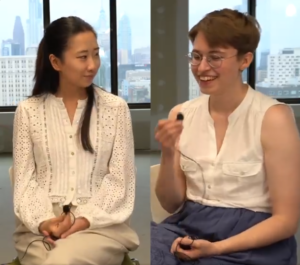
In a new video this month, Jane Li and Maria Heitmeier from Every Cure’s technology team share about one of our biggest technology investments of 2026: building AI agents that can help identify promising new drug-disease matches.

But finding a promising match isn’t enough.

Every prediction generated by our technology goes through rigorous review by Every Cure’s medical experts. Their feedback then helps improve how our AI agents evaluate and prioritize future opportunities, creating a feedback loop between computational discovery and human expertise.

The goal isn’t to replace scientific judgment with AI. It’s to combine what each does best: AI can search across an enormous universe of possibilities, while medical experts bring the context, judgment, and rigor needed to determine which opportunities deserve a closer look.

As the system learns from that feedback, it becomes better equipped to uncover overlooked treatment possibilities and help our team focus its attention where it could have the greatest impact for patients. Watch a video clip here. 


Spreading the word, accelerating the mission

Over the past month, Every Cure has been recognized by leading organizations and media outlets — further helping to bring drug repurposing into the mainstream. 

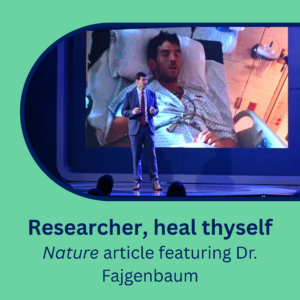
This month, we’re especially excited to share a new feature in Nature highlighting Dr. Fajgenbaum alongside other scientists who turned their own diagnoses into a drive to better understand and treat their diseases. The article explores the unique perspective these researcher-patients bring to science, as well as the challenges and opportunities that come with turning a deeply personal experience into a pursuit for better treatments. 

Click the photos below for the full stories.


Arrow Shape Facebook Instagram Twitter Youtube Play Arrow Left