Dear Every Cure community,

One of the most rewarding parts of our work at Every Cure is seeing years of scientific collaboration translate into meaningful progress for patients. This month, we’re excited to share one of those moments.

The National Comprehensive Cancer Network (NCCN) recently updated its treatment guidelines for a debilitating rare disease called Rosai-Dorfman disease (RDD), elevating lenalidomide in combination with dexamethasone (len/dex) to a preferred treatment option. This milestone reflects the dedication of Dr. Luke Chen and his colleagues, as well as Every Cure’s efforts to help identify, evaluate, and expand the use of this promising repurposed treatment. Most importantly, it’s a reminder of what’s possible when researchers and clinicians work together with one goal in mind: helping more patients benefit from effective treatments.

This progress comes at an exciting time for Every Cure. Our scientific momentum continues to build, with 12 active drug repurposing programs, plans to launch our first clinical trials this fall, and new partnerships that strengthen our ability to bring repurposed treatments to patients faster. Below, you’ll hear from our outstanding CSO, Matt Goddeeris, and read about an important meeting we recently attended. I’m incredibly grateful to everyone who makes this work possible, including our researchers, collaborators, supporters, and the patients and families who inspire us every day.

David Fajgenbaum, MD, MBA, MSc 

Co-Founder & CEO, Every Cure


Important milestone for patients with Rosai-Dorfman disease (RDD)


We are excited to share that the National Comprehensive Cancer Network (NCCN) updated its treatment guidelines for RDD, elevating lenalidomide in combination with dexamethasone (len/dex) to a preferred treatment option for appropriate patients. This update is an important step forward for people living with this rare inflammatory disease, who often face a long diagnostic journey and limited treatment options. By moving len/dex from an “other recommended” therapy to a preferred treatment option, the guideline change will help increase clinician awareness, support broader adoption in practice, and expand insurance coverage.

The milestone reflects years of work by clinician-researchers, including Dr. Luke Chen and his colleagues at Dalhousie University, and marks an important milestone for Every Cure. Working in close collaboration with Dr. Chen’s team, Every Cure applied its AI-powered drug repurposing platform and scientific expertise to help expand the appropriate use of len/dex for patients with RDD. Earlier this year, Dr. Chen, Every Cure researchers, and collaborators published their findings in the American Journal of Hematology that demonstrate how len/dex can be an effective and well-tolerated treatment for patients with difficult-to-treat RDD.

To help share this important milestone, we also recorded a conversation between Every Cure’s CEO Dr. David Fajgenbaum and Dr. Luke Chen discussing what this guideline update means for patients and clinicians.

Read the full press release here and watch the video here.


2026 in Focus: A Message from Our Chief Scientific Officer

In a new video out this month, Every Cure Chief Scientific Officer Dr. Matt Goddeeris shares where our research stands today and what he’s most excited about for the rest of 2026.

With 12 active drug repurposing programs and more expected to launch over the coming months, our team is advancing a growing portfolio of promising opportunities. In the video, Dr. Goddeeris highlights our plans to initiate our first clinical trial, ongoing preclinical studies and upcoming data readouts, and the three scientific papers we’ve published already this year. Each milestone brings us closer to repurposed treatments that hold promise for helping patients with rare and underserved conditions, and we are so grateful to be doing it under Dr. Goddeeris’s leadership. 

At Every Cure, we’re so thankful to our partners and the broader community for the progress they’re helping make possible, from early discoveries to the milestones that move potential treatments toward patients. We hope this update offers a meaningful look at the science driving our mission. Watch the full video here.

We attended the International Center for Polyamine Disorders

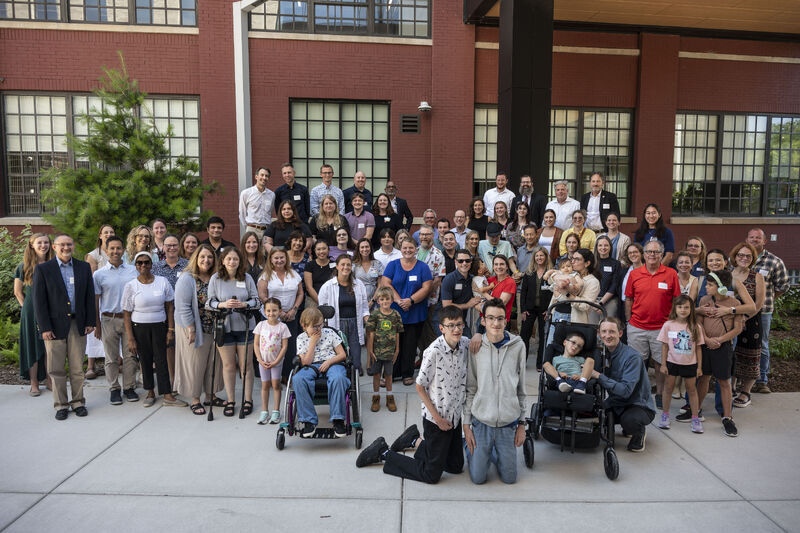
Earlier this month, we attended the International Center for Polyamine Disorders (ICPD) in Grand Rapids, Michigan, a gathering that brought together leading scientists, clinicians, patients, and families working to advance the understanding and treatment of polyaminopathies, including Bachmann-Bupp Syndrome (BABS), an ultra-rare genetic disorder.

At Every Cure, we’re working to advance the use of DFMO, a drug approved to treat African sleeping sickness, as a potential treatment for BABS, one of our 12 active drug repurposing programs. Our goal is to ensure that every patient with BABS who could benefit from this potentially life-changing treatment has access to it. 

Attending ICPD was an important reminder of what’s at stake. We had the opportunity to learn directly from the families we are working to help, and from the scientists and clinicians who have been leading this work for years. The insights we gained and the relationships we formed will directly inform how we continue to push the BABS program forward, and leave us more motivated than ever. We look forward to sharing more updates on the DFMO for BABS program in the months ahead.


Spreading the word, accelerating the mission

Over the past month, Every Cure has been recognized by leading organizations and media outlets — further helping to bring drug repurposing into the mainstream.

Click the photos below for the full stories.


Arrow Shape Facebook Instagram Twitter Youtube Play Arrow Left